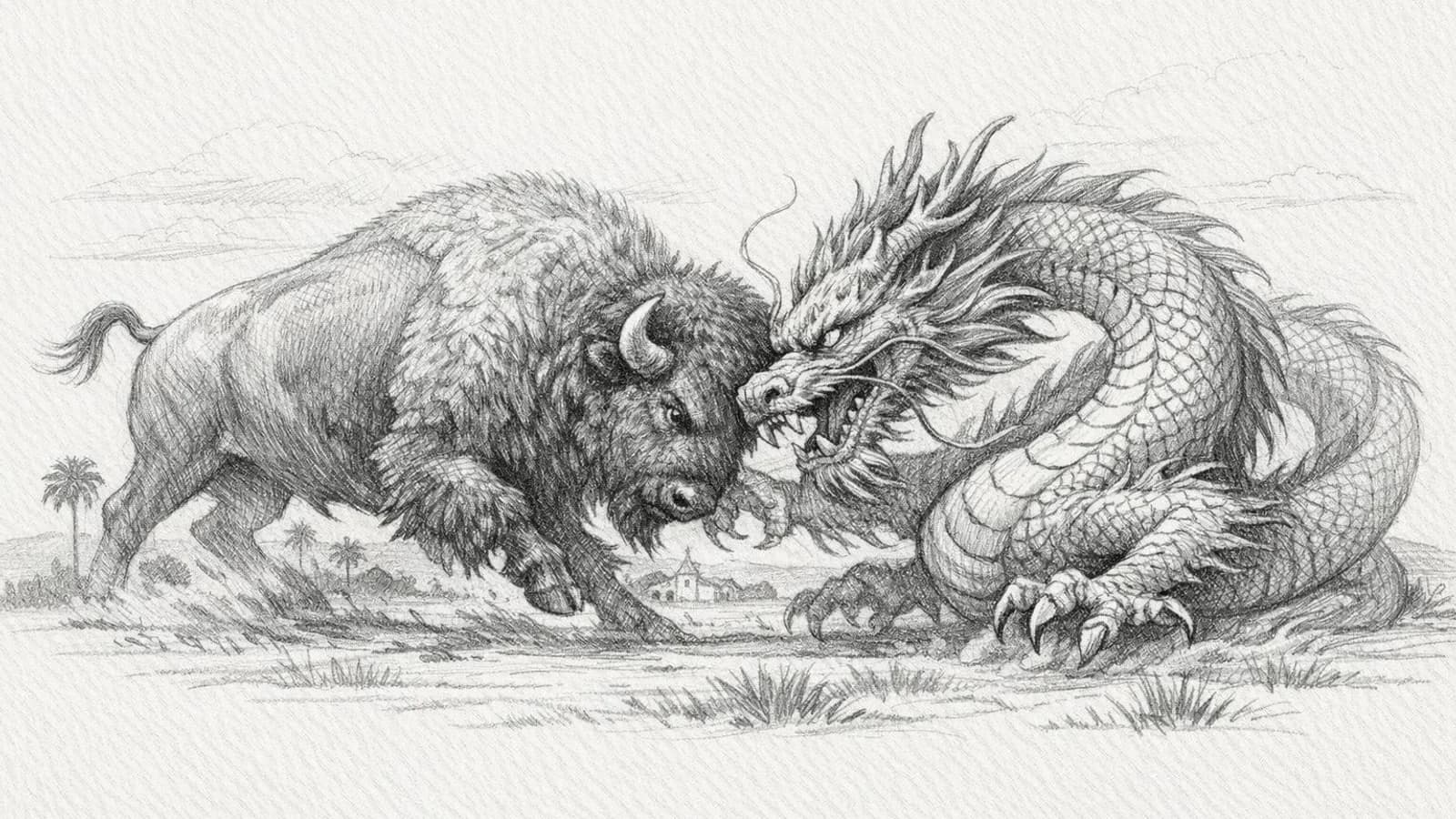
Analysis of U.S. and Chinese Influence in Paraguay
⚡Key Takeaways
- Paraguay is one of only a few countries in the world that recognizes Taiwan instead of the People’s Republic of China, placing it at the center of the geopolitical rivalry between the United States and China.
- The United States actively supports Paraguay’s relationship with Taiwan diplomatically and institutionally, including through the TAIPEI Act and high-level visits to Asunción.
- China is trying to persuade Paraguay to switch its recognition from Taiwan through a combination of diplomatic pressure, economic incentives, and lobbying.
- The conflict is not merely symbolic: Paraguay is being pushed into a strategic balancing act between Washington and Beijing through trade flows, infrastructure issues, and international recognition.
- The article describes Paraguay as a country that continues to stand by Taiwan because this relationship is perceived as more respectful and equal than closer ties with China.
By intuition, the USA has a strong influence on Paraguay and its president. But is that impression correct?
I started an analysis. If you spot a blind spot, feel free to leave a comment.
📚 Deep Research — Source Text
Geopolitical Rivalry in the Heart of South America: A Deep Analysis of U.S. and Chinese Influence in Paraguay
The tectonic plates of global power politics are increasingly shifting to regions historically viewed as peripheral stages. Paraguay, a landlocked state in the center of South America with around 6.8 million inhabitants and a gross domestic product per capita of about 6,260 US dollars, has become a highly relevant microcosm of the geopolitical rivalry between the United States of America and the People’s Republic of China. The country’s strategic significance stems not primarily from its military might, but from its unique diplomatic positioning, its immense agricultural production potential, and its geographic location along the continent’s crucial logistical arteries.
As the only country in South America and one of just twelve states worldwide that maintains diplomatic relations with Taiwan (Republic of China) rather than the People’s Republic of China, Paraguay stands at the epicenter of a diplomatic and geoeconomic tug-of-war. Paraguay’s decision to stick with Taiwan is rooted in the anti-communist era of dictator Alfredo Stroessner, who formalized relations with Taipei in 1957. Since then, the world order has changed radically. UN General Assembly Resolution 2758 of 1971 excluded Taiwan from the United Nations, and the U.S. itself shifted diplomatic recognition to Beijing in 1979. Nevertheless, Paraguay has remained aligned. Today, in an era of renewed great-power competition, the U.S. uses Paraguay as an essential building block to defend its historically grown claim to hegemony in the Western Hemisphere and to counter China’s diplomatic isolation of Taiwan. Beijing, meanwhile, employs a complex strategy of political warfare, economic inducement, and elite co-optation to push Asunción toward a diplomatic switch.
This report provides an exhaustive, in-depth examination of this multidimensional political and economic influence. The system competition between Washington and Beijing in Paraguay is deconstructed across ten specific categories. In doing so, it considers not only overt political actions, but also the second- and third-order networks created through trade flows, technological infrastructure, and social exchange. The analysis reveals a complex interplay of American sanctions diplomacy, Taiwanese compensatory payments, and China’s massive geoeconomic gravity, which increasingly places the Paraguayan state before an existential dilemma.
1. Diplomacy and institutional foreign policy
The diplomatic arena is the most obvious and most formalized battleground of the American-Chinese rivalry in Paraguay. For the United States, preserving Paraguay-Taiwan relations has evolved from a bilateral issue into a priority of its own regional foreign policy. The American support architecture is not merely rhetorical, but deeply institutionally embedded. A turning point was the passage of the “Taiwan Allies International Protection and Enhancement Initiative (TAIPEI) Act” by the U.S. Congress in 2020, which legally obliges Washington to actively support Taiwan’s remaining diplomatic partners.
This diplomatic backing is manifested in an unprecedented frequency of high-level visits. When then-U.S. Secretary of State Mike Pompeo visited Paraguay in 2019, he explicitly stated in his later memoirs that the purpose of the trip was to honor the Paraguayans’ “bold decision” to remain the only South American country maintaining relations with Taiwan. This diplomatic embrace continued seamlessly. In February 2024, Senator Marco Rubio traveled to Asunción—the first visit by a U.S. senator in more than 40 years—to praise President Santiago Peña for standing by Taiwan and symbolically meet with the Taiwanese ambassador. In the summer of the same year, a bipartisan delegation of U.S. lawmakers traveled to discuss growth goals among Paraguay, Taiwan, and the U.S. The U.S. acts here as both diplomatic conductor and shield. When President Peña planned a visit to Taiwan in July 2025 to demonstrate that even small countries can be “first-tier global players,” the U.S. administration reportedly intervened to cancel the trip and avoid excessively provoking Beijing. This vividly illustrates how strongly Washington controls and modulates Asunción’s diplomatic cadence.
China’s strategy of diplomatic encirclement is the direct countermodel. The People’s Republic pursues the “One China principle” with an uncompromising zero-tolerance policy and exerts enormous pressure to force Paraguay into a switch. This strategy, codified in China’s 2025 policy paper for Latin America and the Caribbean, prioritizes the complete diplomatic isolation of Taiwan. China’s aggressiveness on this issue regularly crosses diplomatic conventions. In December 2024, the situation escalated when Beijing sent a special envoy directly to Asunción to systematically lobby Paraguayan lawmakers for recognition of China. The Paraguayan government reacted sharply and immediately expelled the Chinese official for “interference in internal affairs.”
Such incidents are not isolated events, but part of a broader intimidation campaign that also manifests multilaterally. The diplomatic memory in Latin America is shaped by China’s veto politics. A prominent example is 1996, when China, as a permanent member of the UN Security Council, blocked a resolution authorizing peace missions in post-conflict Guatemala—solely because Guatemala at the time diplomatically recognized Taiwan. This act serves as a constant, unspoken threat to states like Paraguay about the potential costs of diplomatic opposition to Beijing on the global stage. In more recent years (2007 to 2023), China has successfully persuaded countries such as Costa Rica, Panama, El Salvador, the Dominican Republic, Nicaragua, and Honduras to sever ties with Taipei by promising stadiums, glass-and-steel buildings, and massive infrastructure projects.
So why does Paraguay resist? The answer lies not only in U.S. pressure, but in a specific foreign-policy mentality. Research on foreign policy analysis shows that Paraguayans view relations with Taiwan as a “friendship among equals,” in which their country receives respect. Taiwan offers status and recognition outside normal hierarchies. China, by contrast, is often perceived in the Paraguayan elite as brusque and uninterested in Paraguayan culture, presenting Asunción only with a categorical either-or choice. This perception triggers historical traumas in Paraguay about large, overbearing neighbors and makes diplomatic resistance a matter of national pride.
2. Geoeconomics: trade, agricultural markets, and opportunity costs
The economic dimension reveals the greatest contradiction and the most sensitive weakness in Paraguay’s geopolitical positioning. As a massive producer of agricultural goods—driven by a 27 billion US dollar economy—Paraguay is structurally dependent on global sales markets, yet paradoxically remains largely cut off from the world’s largest consumer market, the People’s Republic of China.
To cushion the immense opportunity costs for Paraguay, the United States and Taiwan have established a complex compensatory economic system. In recent years, the U.S. has dramatically intensified its trade relations with Paraguay, institutionalized through the Trade and Investment Framework Agreement (TIFA), which entered into force in 2021 and whose council last met in 2024. The macroeconomic data confirm this trend: bilateral trade in goods and services with the U.S. amounted to an estimated 4.2 billion USD in 2024 and showed steady growth. In 2025, U.S. goods exports to Paraguay rose to 4.4 billion USD (up nearly 39 percent), while imports from Paraguay climbed to 559 million USD (up 57 percent).
The real geoeconomic lifeline for the alliance, however, was the regulatory opening of the U.S. and Canadian markets for Paraguayan beef. Beef, alongside soy, is the backbone of Paraguay’s export economy. In 2025, Paraguay’s beef exports rose in value to a record high of 2.13 billion USD (an increase of almost 20 percent), although export volume at 490,000 tons (carcass weight equivalent) actually declined slightly due to lower slaughter and herd shrinkage. How can this paradoxical rise in revenue amid falling volume be explained? The answer lies in the premium prices paid by geopolitical allies. In 2025, the United States and Taiwan became the second- and third-largest markets for Paraguayan beef (behind Chile) and compensated for the missing volume through extremely high purchase prices.
This “dollar diplomacy” by Taiwan becomes even more dramatic in the pork sector. In 2025, the export volume of Paraguayan pork jumped by 54 percent year-on-year, generating revenue of 55.8 million USD (a rise of nearly 67 percent). Taiwan functions here as an absolute monopoly buyer and consumes a staggering 80 percent of all Paraguayan pork exports. In the context of rising global protectionism, this preferential access to Taiwanese markets has become vital for the export-oriented Paraguayan economy.
Agricultural export segment (2025) Dynamics volume vs. previous year Dynamics revenue vs. previous year Main buyers & geopolitical driversBeefStagnation / slight decline (+0.78% to approx. 490k tons)Strong growth (+20% to 2.13 bn USD)
Chile (1st place), USA (2nd place), Taiwan (3rd place). The U.S. and Taiwan drive record revenue through high prices.
PorkMassive growth (+54%)Extreme growth (+66.8% to 55.8 m USD)
Taiwan dominates this sector completely and consumes 80% of exports.
PoultrySharp decline (-31%)Sharp decline (-36%)
General decline in Paraguay’s animal-product export volumes is driven by this.
Despite this artificial support from Washington and Taipei, China’s geoeconomic gravity remains omnipresent and threatening. China is by far the world’s largest consumer of beef and soybeans. Because Beijing rejects direct trade with states that recognize Taiwan, Paraguay must export its products through complex detours, third countries, or blending, which significantly reduces the profit margins of local producers. A Paraguayan farmer in Caaguazú summed up the frustration at the grassroots level: “The phone I’m speaking into is from China. The shoes and clothes I’m wearing come from China. So why can’t we export food to China?”
The indirect effects of China’s market power are devastating for Paraguay. Since Paraguay cannot export to China, the large neighbor Brazil benefits immensely from Chinese demand. But if beef prices in China fall—as seen recently—Brazil looks for alternative markets and floods countries like Chile, Russia, and Israel with cheap beef. Since Chile is by far the most important market for Paraguayan beef, Paraguay faces massive price pressure there from Brazilian competition driven by China’s market fluctuations. China’s influence in Paraguay thus manifests as an oppressive economic latency: the permanent denial of market access functions as a steadily growing opportunity-cost tax on the Paraguayan economy. China’s trade volume with Latin America reached record highs of 518 billion USD in 2024 and is expected to exceed 700 billion USD by 2035. Paraguay’s agricultural lobby, drawn by this inevitable economic center of gravity, is increasingly pressuring its own government to abandon the Taiwan consensus in favor of more profitable margins in the Middle Kingdom.
3. Infrastructure, logistics, and the Hidrovía artery
Infrastructure is the physical manifestation of geopolitical primacy. In South America, this competition is concentrated largely on the so-called “Hidrovía,” the vast Paraguay-Paraná river system stretching more than 2,000 miles. This waterway, which runs from the headwaters in Brazil’s Mato Grosso through Paraguay and along the Argentine border to the Río de la Plata and the Atlantic, links more than 100 inland ports and is the subcontinent’s most critical commercial lifeline.
The United States has a deep, historically rooted connection to this river system, though it was largely forgotten in the 20th century. As early as October 1858, U.S. President James Buchanan sent the largest naval deployment in U.S. history to date—19 warships—not to the high seas, but inland to Paraguay. This show of force was a response to a Paraguayan attack on the USS Water Witch, a ship mapping the waterway. In the decades that followed, the route disappeared from Washington’s radar, overshadowed by chokepoints such as the Panama Canal. Today, however, in light of exponential growth in raw-material trade, the Hidrovía is again coming into focus. The Rosario Chamber of Commerce (BCR) in Argentina, the primary grain port on the Paraná, predicts that freight volume on the waterway could double from its current level of over 100 million tons annually by 2035. Transported goods include soybeans, corn, iron ore, and increasingly the minerals critical to the energy transition.
Washington now once again sees this artery as strategically highly relevant and is actively trying to influence it. A major vehicle is security cooperation. The U.S. supports Paraguay in shielding the waterway from transnational criminal networks that use the river system to smuggle drugs from the Andes to the Atlantic. Through this security-policy presence, the U.S. establishes a softer form of logistical control over this essential route for critical raw materials.
Nonetheless, the physical investment needs remain gigantic, and here U.S. ambitions collide with China’s infrastructure offensive. The river system suffers from years of underinvestment and extreme drought. Last year, water levels in the Paraguay River reached historic lows, causing an estimated 300 million US dollars in losses to the Paraguayan economy, in addition to the massive drought damage of 2020–2021. Ships on Argentina’s Paraná reportedly run aground almost monthly, forcing them to drastically reduce cargo. This combination of enormous strategic value and acute climatic and infrastructural vulnerability makes the region highly susceptible to external actors.
China is pushing into this vacuum with its Belt and Road Initiative (BRI). China’s approach to infrastructure in Latin America is marked by unprecedented gigantism, as shown by the recent opening of the 3.5 billion USD Chancay port in Peru or the massive rail projects across Brazil. China is pushing for direct access to South American agricultural and mineral resources. In March, for example, shipments of Argentine lithium carbonate bound for China began moving through the port in Rosario. China uses the awarding of infrastructure projects as a direct lure for diplomatic recognition, a tactic that has already successfully isolated Taiwan in Panama, El Salvador, and Honduras.
For Paraguay, this creates a drastic dilemma. Taiwanese infrastructure investments in Paraguay, though present and well-intentioned, are dwarfed in scale by China’s multibillion-dollar projects in the region. The asymmetry is obvious: Taiwan, with a population of around 24 million and a GDP of just over 1 trillion USD, cannot possibly counter China’s checkbook diplomacy, given its 1.4 billion people and GDP of more than 31 trillion USD. As long as Paraguay sticks with Taiwan, the country remains excluded from massive Chinese infrastructure funds for bridges, ports, and roads. The third-order consequence is a creeping infrastructural decoupling of Paraguay from its neighboring states, which are transforming their logistics networks into the 21st century with Chinese capital.
4. Technology, telecommunications, and the 5G conflict
In the 21st century, digital telecommunications infrastructure is the invisible backbone of national sovereignty. Nowhere is the direct struggle for power between the U.S. and China clearer than in the global rollout of the 5G mobile standard. In Paraguay, this sector illustrates the massive and successful pressure Washington has exerted to push Chinese technology companies out of the Western Hemisphere.
U.S. intervention in the South American technology market is based on deep cybersecurity concerns. Washington views the dominance of Chinese providers, above all Huawei and ZTE, in critical networks as an unacceptable risk to national and international security. Continually citing “hidden backdoors,” such as those discovered in Huawei equipment at Vodafone Italy between 2009 and 2011 (which Huawei dismissed as unintended vulnerabilities), the U.S. argues that the hardware could be misused by the Chinese government as a spying tool. In the U.S. itself, the government is taking radical action and financing “rip and replace” programs that provide telecom companies with federal funds to physically remove Chinese infrastructure from networks. At the same time, Washington has massively increased pressure on allied states to join this blockade.
Paraguay has bowed to this U.S. diktat in a skillful, indirect way. In order not to anger Washington while avoiding direct conflict in the WTO context, the Paraguayan government implemented a specific cybersecurity regulation ahead of the 5G spectrum auctions in 2025/2026. This regulation categorically excludes companies from countries that have not signed the 2001 Budapest Convention on Cybercrime from participating in public 5G tenders. Since the People’s Republic of China has never signed this agreement, Chinese vendors such as Huawei were effectively and legally barred from the Paraguayan market.
However, market reactions to this geopolitically motivated regulation were turbulent. In August 2025, Paraguay’s National Telecommunications Commission (Conatel) held the long-awaited 5G spectrum auction in the 3.5 GHz band. The result shocked the market: only Claro and the Argentine internet service provider Nubicom (a newcomer that must build its entire mobile infrastructure from scratch) submitted bids and secured 200 MHz of spectrum each (Claro in the 3.5–3.7 GHz range, Nubicom in 3.3–3.5 GHz). The real heavyweights of Paraguay’s telecommunications market, Tigo and Personal, boycotted the auction entirely. They explicitly justified this historic abstention with the restrictive regulations that banned equipment from Chinese manufacturers.
5G spectrum auction Paraguay (August 2025) Bidder status Allocated spectrum Geopolitical background / rationaleClaroWinner200 MHz (3.5–3.7 GHz)
Acceptance of the government’s cybersecurity guidelines. Planned rollout in early 2026.
Nubicom (Argentina)Winner200 MHz (3.3–3.5 GHz)
New market entrant with no existing infrastructure in Paraguay. Must build the network from scratch.
TigoBoycott-
Refused to participate due to restrictive rules explicitly excluding Chinese vendors (Huawei/ZTE).
PersonalBoycott-
Joined Tigo’s boycott for the same technological and financial reasons.
This boycott reveals the immense financial burden of U.S. policy for developing countries. Large parts of existing 3G and 4G networks in South America are based on inexpensive and high-performance Huawei technology. Switching to the 5G standard with Western providers such as the Swedish company Ericsson comes with enormous costs, since these firms traditionally charge higher prices and their lack of interoperability with existing Chinese legacy systems forces expensive complete replacements. Ericsson itself is undergoing a geopolitically driven transformation: while five years ago it still generated almost 10 percent of its revenue in China, that share had fallen to a mere 4 percent by 2024 as China, in turn, pushes Western providers out. Instead, Ericsson is now 43 percent dependent on U.S. customers. A sudden drop in U.S. demand in the third quarter of 2024 (down 17 percent) is forcing Ericsson to make massive cost cuts, which tends to keep equipment prices high in markets such as Paraguay.
As the China Index shows, the technology sector, with a penetration of 25 percent, is the domain in which China exerts its relatively greatest influence in Paraguay. The deeper insight in this sector is unambiguous: the U.S. has achieved a formidable geopolitical victory over China in Paraguay at the regulatory level. However, Paraguayan network operators and, ultimately, end consumers pay the price for this transatlantic technology blockade, because infrastructural competition has been artificially reduced and investment delayed.
5. Security policy, military cooperation, and surveillance
Paraguay’s security architecture is traditionally deeply embedded in the Western, U.S.-dominated hemispheric system. Direct Chinese presence is virtually nonexistent here, producing a significant asymmetrical dominance by Washington, which acts as the primary security guarantor.
Military and intelligence cooperation between the U.S. and Paraguay is institutionally tight and was recently renewed. In January 2025, the two states signed a formal defense pact, taking military cooperation to a new level. In this context, Paraguay also joined the U.S.-administration-initiated “Board of Peace,” signaling absolute alliance loyalty. A central operational pillar of this American-Paraguayan cooperation is combating transnational crime, especially in the highly sensitive tri-border area between Paraguay, Argentina, and Brazil. The U.S. supports Paraguayan special units logistically and through intelligence in fighting money laundering, drug trafficking, human smuggling, and networks suspected of financing international terrorism. Paraguay regularly takes part in U.S.-led counterterrorism training and programs. Washington sees Paraguay’s continued willingness to crack down hard on criminal structures in the tri-border area as the ultimate proof of Asunción’s reliability as a security anchor in an otherwise volatile South America. This loyal stance is also reflected in international diplomacy: Paraguay unconditionally aligns itself with U.S. global security narratives, as seen in its unwavering support for Israel and its clear condemnation of Russia’s invasion of Ukraine.
In stark contrast, China plays virtually no military role on Paraguayan soil. The China Index quantifies China’s influence in Paraguay’s military sector at a marginal 9.1 percent and in law enforcement at only 18.2 percent. There are no joint exercises, no significant arms purchases, and no police cooperation. Still, this immediate absence should not obscure Beijing’s broader security ambitions in the immediate neighborhood. China is massively expanding its strategic “dual-use” presence—infrastructure usable for both civilian and military purposes—in South America, especially in the areas of space and satellite-based surveillance.
As early as 1984, China began signing agreements for joint satellite development with Brazil. Today, China operates its largest extraterritorial space facility in the Patagonian desert of Argentina. In addition, there are satellite ground stations in Bolivia, Brazil, Chile, and Venezuela. Within the BRICS alliance, Beijing also pushed in 2022 for the creation of a joint committee on space cooperation to facilitate data exchange between member states’ satellites. In April 2024, China even held the first Forum on Space Cooperation between China and the Latin American and Caribbean States (CELAC). This dense concentration of Chinese space and surveillance technology in Paraguay’s immediate neighborhood is a major concern for U.S. military and political decision-makers. The geographic proximity of these facilities to the U.S. and to sensitive communication lines in the hemisphere fuels fears that they could be used to spy on U.S. assets or disrupt communication channels in a conflict. The strategic conclusion is clear: while the U.S. in Paraguay continues to rely on traditional “boots on the ground” in the form of advisers, police support, and direct defense pacts, China is weaving a currently invisible, highly technological surveillance and information network across the macro-region that is increasingly making traditional borders obsolete.
6. Political networks, sanction regimes, and elite co-optation
In states with developing institutional structures, direct access to political and economic elites is often a far more efficient lever than negotiating official, lengthy state treaties. In Paraguay, the two superpowers use diametrically opposed tools to influence the ruling class: the U.S. relies primarily on legal coercion, extraterritorial sanctions, and discipline, while China relies on economic seduction, status enhancement, and opulent material promises.
The United States’ primary and most aggressive instrument for disciplining the Paraguayan elite is the imposition of economic sanctions. Under President Joe Biden’s administration, the U.S. State Department, through Ambassador Marc Ostfield, operated almost like a prosecutorial actor within Paraguayan domestic politics. The high point of this strategy of legal power projection was January 2023. The U.S. Treasury Department’s Office of Foreign Assets Control (OFAC) activated the powers of Executive Order 13818, based on the Global Magnitsky Human Rights Accountability Act, and imposed unprecedented sanctions on two of the country’s most powerful men: former president and billionaire Horacio Cartes (in office 2013–2018), the undisputed leader of the ruling Colorado Party, and then-serving vice president Hugo Velázquez. U.S. Secretary of State Antony Blinken accused the two politicians of “systemic corruption” and “state capture” (the seizure of state institutions by private interests), undermining the country’s democratic foundation.
The OFAC sanctions immediately freeze all assets of the affected persons and entities within U.S. jurisdictions and prohibit U.S. citizens from conducting any transactions with them. In practice, this means total exclusion from the global U.S. dollar payment system, which amounts to an economic death sentence. The Treasury Department at the same time named four companies controlled by Cartes as sanctioned entities: Tabacos USA Inc., Bebidas USA Inc., Dominicana Acquisition S.A., and Frigorifico Chajha S.A.E. In August 2024, the net was drawn even tighter when Tabacalera del Este S.A. (Tabesa), Paraguay’s largest tobacco producer, was also sanctioned for allegedly providing material support to Cartes. These draconian U.S. measures triggered a political earthquake; Vice President Velázquez even temporarily suspended his presidential candidacy.
Yet this sanctions-driven power politics carries fundamental risks of inconsistency and undermines U.S. credibility. After the change of administration in Washington, the new Trump administration radically reversed course. On October 6, 2025, OFAC fully lifted the sanctions against Horacio Cartes and his entire corporate empire, including Tabesa, and removed them from the SDN (Specially Designated Nationals) list. The explanation given was vague, stating that the sanctions were “no longer necessary to encourage behavior change,” even though serious allegations of bribery and corruption were still circulating in Paraguay. Paraguay’s incumbent president Santiago Peña immediately welcomed the lifting as a boost to investor confidence. For external observers, however, this volatile, seemingly campaign-driven sanctions policy signals that American anti-corruption efforts are highly politicized and transactional. If severe punitive measures are abruptly reversed after changes in power in Washington, ethical foreign policy becomes bargaining material, which weakens U.S. institutional authority in Latin America over the long term.
While Washington disciplines the Paraguayan elite with the sword of sanctions, Beijing pursues a soft charm offensive of seduction. Since the ruling Colorado Party is firmly woven into the structures of Taiwan recognition, the lobbying of the Chinese Communist Party (CCP) is focused intensively on co-opting Paraguayan opposition politicians and future decision-makers outside the establishment. A prominent example of this tactic occurred in late 2025: opposition lawmakers, including Leidy Galeano of the newly founded Yo Creo party and Roya Torres, were invited on a fully paid, highly luxurious “study trip” to six Chinese metropolises. These trips, coordinated by people close to the Chinese consulate in neighboring São Paulo, Brazil, featured lavish banquets, stays in luxury hotels, and visits to the Great Wall.
However, these trips are not mere pleasure excursions, but meticulously orchestrated political warfare. The parliamentarians were shown state-of-the-art high-speed rail stations and advanced medical treatment centers. In endless loops, Chinese officials repeated a core narrative: Paraguay risked missing out on massive economic gains and modernization leaps if it stubbornly clung to the unprofitable alliance with Taiwan. Investments and trade flows could begin to flow almost overnight if Paraguay simply switched recognition to Beijing. This “elite capture” strategy has a dramatic effect. When lawmaker Galeano returned to Paraguay, she publicly declared: “Everything I saw there, I wanted for my country.” Such statements show that China has already deeply infiltrated the political discourse and normative orientation in Asunción—without having even one accredited diplomat officially stationed in the country.
7. Official Development Assistance (ODA) and development cooperation
Development aid, formally known as Official Development Assistance (ODA), is a classic and historically proven instrument of “soft power” for forging long-term alliances. In this strategic sector, a tectonic shift is currently underway globally, and specifically in Latin America, to the detriment of the U.S.
Historically, the United States, through the United States Agency for International Development (USAID), has been a massive, institution-shaping donor for Paraguay. The U.S. government used USAID to implement far-reaching programs to combat corruption, reduce rural poverty, promote formal economic structures, and create jobs. A look at past project portfolios makes the depth of civil society engagement clear: USAID, for example, funded the “Local Works Program” to strengthen local communities, invested 2 million USD in expanding investigative journalism (to promote transparency), contributed 1.66 million USD to the U.S. Peace Corps Overseas Program Support, and allocated millions to strengthen the electoral tribunal and the national comptroller’s office.
However, this established foundation of development cooperation is crumbling massively under Washington’s current fiscal and political reality. The new Trump administration announced far-reaching, drastic cuts to foreign aid in early 2025. Internal White House plans aimed to cancel up to 83 percent of USAID’s operational programs and fold the remaining remnants directly into the State Department. The macroeconomic consequences of this policy are fatal: the OECD projected a dramatic drop of 9 to 17 percent in global net ODA for 2025, after an already 9 percent decline in 2024. For the first time in nearly 30 years, the U.S. and other core Western states cut their development aid simultaneously in consecutive years.
The consequences of these cuts go far beyond political symbolism and directly affect human lives. Renowned think tanks such as the Center for Economic and Policy Research (CEPR) estimate, based on models of aid effectiveness to date, that the abrupt U.S. budget cuts—especially in HIV/AIDS, malaria, and tuberculosis control as well as humanitarian aid—could lead to an additional 500,000 to 1,000,000 deaths worldwide each year. For Paraguay, the American retreat from ODA means the loss of a central institutional stabilizer. It weakens the U.S. narrative of being a “reliable partner,” while marginalized rural regions of the country directly feel the loss of health and education funding.
China is moving into exactly this financial and ideological vacuum left by the U.S. and USAID at breathtaking speed. However, Beijing does not operate with traditional “development aid” in the Western sense. It does not demand transparency, strengthening of civil society institutions, or good-governance reforms. Instead, China offers turnkey, gigantic infrastructure projects, technology transfers, and unconditional state loans. In May 2025, President Xi Jinping demonstrated this new geoeconomic architecture at a specially convened summit for Latin American and Caribbean heads of state and government in Beijing. There Xi announced a new massive investment credit line of 9 billion US dollars specifically for the region.
The contrast from Paraguay’s perspective could not be starker: on one side the U.S., canceling programs, slashing budgets, and threatening sanctions when the judiciary does not function according to Western standards; on the other side China, offering billions in loans for bridges and airports—on the sole condition that Paraguay accept the One China principle and sever ties with Taiwan. The causal relationship is obvious: the forced retreat of Western soft power drastically increases the relative attractiveness of China’s authoritarian but highly pragmatic promises of modernization in South America.
8. Healthcare and medical diplomacy
Health policy, accelerated dramatically by the global COVID-19 pandemic, has evolved from a purely development-policy side issue into a central battleground of asymmetric diplomacy. In Paraguay, the institutionalized Western health architecture and China’s opportunistic medical diplomacy collide directly.
Paraguay’s health sector is heavily shaped and supported by Western-dominated international organizations. The Pan American Health Organization (PAHO), a specialized regional sub-organization of the World Health Organization (WHO) headquartered in Washington, D.C., orchestrates much of the country’s systematic health promotion. For the current 2024–2025 biennium, the approved PAHO budget for Paraguay amounts to 10.5 million USD, representing a clear increase of 6.9 percent (680,000 USD) over the previous period.
PAHO’s priorities in Paraguay reflect a long-term, structural approach. Measures with the highest priority include improving access to comprehensive and high-quality health services (with a focus on health systems and the life course), combating non-communicable diseases (NCDs) and their risk factors, and building cross-sector responses to violence and injury. Epidemic prevention and control, as well as the development of integrated health information systems, are also central to PAHO’s architecture. These multilateral programs, formerly heavily co-financed by USAID funds, are deeply woven into Paraguayan state administration. However, the announced radical ODA cuts in the U.S. (with potential declines in bilateral health financing of up to 33 percent) threaten precisely these quiet but existential programs, sharply increasing Paraguay’s structural vulnerability to external epidemiological or economic shocks.
PAHO Budget & Priorities Paraguay (2024–2025) Detail focus Strategic approach (Western model)Total budget
10.5 million USD (+6.9% vs. 2022–2023)
Long-term funding security, institutional capacity-buildingHigh priority: health systems
Access to comprehensive, high-quality health services across the life course
Building stable national governance in the health sectorHigh priority: disease prevention
Combatting non-communicable diseases (NCDs), mental health, epidemic control
Focus on prevention, statistics, and evidence-based medicineMedium priority: basic care
Combating malnutrition, eliminating communicable diseases
Poverty reduction as a health factor
China’s approach to health policy in the Global South is far more opportunistic, direct, and highly politicized. Beijing’s medical diplomacy often acts as an unvarnished lever of pressure. A glaring example of this tactic occurred during the height of the COVID-19 crisis in 2021. While Paraguay desperately sought vaccines, intermediaries reportedly approached the government in Asunción and offered urgently needed Chinese COVID-19 vaccines. The condition, however, was a diplomatic ultimatum: in exchange for the life-saving doses, Paraguay had to immediately sever diplomatic relations with Taiwan. Although the Paraguayan government, under heavy domestic pressure, rejected this cynical extortion attempt (and the U.S. and Taiwan later massively increased logistical support and vaccine deliveries instead), the incident made it unmistakably clear that Beijing is prepared to instrumentalize medical emergencies as a geopolitical weapon.
Today, after the pandemic has subsided, China’s medical diplomacy is shifting from extortion to the demonstration of technological superiority. The Paraguayan politicians and lawmakers (such as Roya Torres) who were taken on China-sponsored lobbying trips through Chinese metropolises in late 2025 were deeply impressed, especially by the extremely advanced medical treatment centers. Chinese officials use these state-of-the-art hospitals as a backdrop to send a clear message: if Paraguay were to switch sides and recognize the One China principle, its chronically underfunded and deteriorating health system could benefit massively from Chinese high-tech medicine, cutting-edge equipment, and direct technology transfer.
9. Education, science, and academic exchange
The intellectual shaping of future elites through educational and scientific exchange is a long-term, deeply effective instrument of ideological power. In Paraguay, the West has historically dominated this space almost without competition.
The United States and Taiwan have excellently established, highly institutionalized mechanisms of academic exchange in Paraguay. A cornerstone of this American “soft power” is the Fulbright Program, a decades-long constant of Washington’s cultural hegemony. These programs enable Paraguayan students, researchers, and young professionals to gain exclusive access to U.S. universities and create lifelong networks. The U.S. State Department complements this with “public diplomacy” programs that explicitly aim in Paraguay to teach English, strengthen entrepreneurial skills, and promote civic participation—especially among women, indigenous peoples, and marginalized communities. In parallel, the Republic of China (Taiwan) operates massive nation-building sponsorship through the Ministry of Education’s (MOE) “Huayu Enrichment Scholarship Program” and the “Global Ambassador Scholarship Program.” Taiwan grants Paraguayan students extremely generous monthly scholarships of about NT$25,000 (approx. 830 USD) to study Mandarin in Taiwan, learn about Taiwanese culture, and internalize the island’s democratic values. Through the U.S. Fulbright-Hays Group Projects Abroad program, even study stays by Western students in allied Taiwan are co-financed, further strengthening the transatlantic-Pacific educational axis. These coordinated efforts shape a deeply Western-democratic worldview among Paraguay’s academic circles.
China’s access to this education sector, by contrast, is highly regulated and formally constrained. Because China does not maintain diplomatic relations with Paraguay, no official Confucius Institutes—Beijing’s primary instrument for global language and cultural outreach—can be opened in Asunción (these do not operate in states that recognize Taiwan). The Chinese government does offer globally generous scholarships (Chinese Government Scholarships - CGS) for talented students to study at Chinese universities, but the application process for Paraguayans is complex and must be handled via third countries or informal channels.
Accordingly, the China Index rates China’s influence in Paraguay’s university and academic landscape as extremely marginal, at just 2.3 percent exposure. Lacking institutional access to universities, Beijing has adapted its strategy: instead of training university students over the long term, China is shifting to the “express education” of politicians through the aforementioned elite, fully funded delegation trips that effectively function as highly intensive, exclusive “summer schools” for adult decision-makers.
10. Media landscape, information space, and narratives
Control over narratives, public perception, and interpretive authority is the fundamental battlefield in the age of information warfare. Paraguay’s media landscape operates in a somewhat precarious environment; on Reporters Without Borders’ (RSF) World Press Freedom Index for 2024, Paraguay ranked 115th, and Freedom House’s Global Freedom Index classifies the country as only “Partly Free” with 63 out of 100 points.
The United States enjoys a historical and institutional head start in this information space. Paraguay’s largest media companies are mostly Western-oriented, and the discourse on democracy, free trade, and Western alliances is deeply entrenched. U.S. institutions such as USAID also actively finance multi-million-dollar programs to strengthen “investigative journalism” in the country. Such U.S.-supported initiatives often focus on exposing local corruption and lack of transparency. They also implicitly act as a defensive mechanism against political factions that could be co-opted by opaque foreign funders—often with links to China. Nevertheless, the U.S.’s reputation in the information space is not flawless. Fluctuating approval ratings and the erratic foreign policy that changes sharply from one U.S. president to the next (for example, the abrupt imposition and later lifting of sanctions on high-profile politicians such as Cartes) are discussed critically in the press and weaken the U.S. narrative as a reliable, morally consistent hegemon.
The ideological confrontation in the media space becomes especially clear when comparing the strategic guidelines of the two major powers, as they are received in the international press.
Comparison of hemispheric strategies in media discourse"Trump Corollary" (U.S. National Security Strategy 2025)China’s Latin America strategy (Policy Paper 2025)Historical reference
Reverts to “Big Stick” diplomacy and the Roosevelt Corollary (1904). Explicitly claims the region as an exclusive U.S. sphere of influence.
Echoes the “Good Neighbor Policy” (FDR) and the “Alliance for Progress” (JFK), with a focus on “mutual benefit.”
Primary instrumentarium
Economic coercion, hard sanctions, diplomatic threats, open confrontation (“international police power”).
Covert economic coercion coupled with massive offers for accelerated development and mega-infrastructure projects.
Conditionality for partnership
Explicit demand to end the influence of adversarial foreign actors (China/Russia).
No formal interference in internal affairs, but mandatory acceptance of the One China principle (Taiwan’s isolation).
Despite the lack of formal diplomatic channels and although there are no direct local branches of the Chinese state media network (“World Chinese Media”) in Paraguay, the narrative of the Chinese miracle is increasingly and inexorably seeping into local discourse. The possibility of establishing diplomatic relations with the People’s Republic of China is no longer a fringe topic, but already an integral part of the 2023 presidential election campaigns. The China Index rates China’s influence in Paraguay’s media sector at 4.5 percent—a seemingly small, yet very real and growing footprint.
More and more economic experts, agricultural lobbyists, and journalists in the Paraguayan press are openly praising the model of economic symbiosis with China and questioning Taiwan’s usefulness in light of the billions in missed gains. China’s strategic communication in South America is highly effective precisely because it completely avoids ideological indoctrination (such as promoting communism). Instead, the Chinese narrative focuses purely on economic pragmatism, technocracy, and win-win cooperation. Even without direct media ownership in Paraguay, Beijing thus manages masterfully to keep the economic opportunity costs of Paraguay’s “special path” constantly in the news cycle and to gradually transform public opinion.
Conclusion and comparative assessment of the spheres of influence
Paraguay is one of the very last bastions of formally uncontested Western dominance in the heart of South America. Yet the multidimensional analysis across ten categories reveals a highly complex, fragile picture in which the United States leads on paper and in the security framework, but China’s irresistible geoeconomic gravity is steadily eroding the state.
Areas where the U.S. dominates:
The United States, often in close alignment with Taiwan, retains absolute and undisputed supremacy in the traditional categories of state power: diplomacy, security and the military, education and academic exchange, and political discipline through sanctions. Through the legislative anchoring of support for Taiwan (the TAIPEI Act), robust bilateral defense pacts, and the legal, extraterritorial control of elites (Magnitsky sanctions by OFAC), the U.S. keeps Paraguay in an iron diplomatic orbit. The significant victory in banning Chinese hardware (Huawei) from the national 5G infrastructure in the field of technology and telecommunications also vividly demonstrates that Washington can still sovereignly dictate and codify in law its will in Paraguay on essential questions of national cybersecurity. The U.S. also continues to benefit from a fundamentally Western-leaning media consensus in the information space.
Areas where China’s influence is growing or dominant:
The People’s Republic of China, by contrast, absolutely dominates the spheres of real and potential goods-based economics: in trade and geoeconomics as well as infrastructure and logistics. Although Taiwan buys Paraguayan pork and beef at heavily subsidized premium prices, it is the persistent denial of access to the vast Chinese consumer market that torments and dominates Paraguay’s economic discourse. China’s promises of massive infrastructure investment (“Belt and Road”), especially in expanding the critical Hidrovía river artery and rail lines, vastly outweigh the U.S. offers in quantitative terms.
Also alarming for Washington is that the balance in development assistance (ODA) and healthcare is currently shifting dramatically: while the U.S. is cutting budgets and canceling USAID programs in the region due to fiscal priorities, China is immediately ready to fill the material and financial gaps with billions in loans, hospitals, and “checkbook diplomacy.” China also demonstrates a growing, unsettling efficiency in elite co-optation (political networks) by effectively turning Paraguayan decision-makers into mouthpieces for its interests through luxurious technology trips to China.
Final assessment of the strategic trajectories:
The United States’ strategy in Paraguay is fundamentally defensive and reactive. It relies heavily on Cold War-era alliances, security coercion, and the desperate attempt to preserve the formal institutional framework of Taiwan recognition at almost any cost. Beijing’s strategy, by contrast, is offensive, deeply pragmatic, and highly patient. China does not attack Paraguay’s ideology, but instead laser-targets material reality, the agricultural lobby’s wallet, and the political elite’s hunger for modernization.
In the long term, the status quo is likely to wobble for the U.S. If Taiwan is unable to continue buying Paraguay’s agricultural exports at top prices reliably and without interruption, and Washington does not offset the massive reduction in U.S. development aid with substantive, tangible free trade agreements or direct infrastructure investment, China’s economic pull will become unstoppable. The U.S. still undoubtedly has more formal political and military influence in Asunción today, but China already controls the promise of unlimited economic prosperity in the minds of Paraguayans. Once the critical point is reached where Paraguay’s economic pain outweighs fear of American sanctions and diplomatic displeasure, South America’s last ally of Taiwan will also succumb to Beijing’s irresistible geopolitical pull.
Why Paraguay matters so much to China, Taiwan, and the United States - Latinoamérica 21
U.S. and China Spar for Influence on the Paraguay-Paraná River System
How China is wooing Paraguay's political class away from Taiwan - Gulf Today
China's Political Warfare: Challenges to Taiwan and the United States in Latin America
Paraguay China Taiwan Diplomatic Ties Explained - The China ...
Latin America in a vise: The “Trump Corollary” vs. China's 2025 ...
Dollar Diplomacy, Democracy, and Paraguay's China Crossroads - Columbia Political Review
Paraguay | United States Trade Representative
Paraguay meat exports volume fall nearly 12% in 2025, revenue up ...
Report Name: Livestock and Products Annual - USDA/FAS
Paraguayan beef trade to decline in 2025 - GAIN | The Cattle Site
China's Growing Influence in Latin America | Council on Foreign Relations
5G auctions in Latin America do not veto Huawei as requested by Washington
Forging the 5G future: Strategic imperatives for the US and its allies - Atlantic Council
Paraguay awards frequencies for 5G services - RCR Wireless News
Europe is not behind China and the US in 5G technology - Real Instituto Elcano
Ericsson must cope with a sudden US slump and a China threat - Light Reading
Bilateral Relations - U.S. Embassy in Paraguay
U.S. Relations With Paraguay - United States Department of State
In Paraguay, Politicians Await the U.S.’s Next Move - Americas Quarterly
Treasury Sanctions Paraguay's Former President and Current Vice President for Corruption
OFAC Delists Former Paraguayan President Horacio Cartes ...
Reinforcing Sanctions on Former Paraguayan President Horacio Cartes
Paraguay–United States relations - Wikipedia
U.S. Relations With Paraguay - United States Department of State
View Grant Opportunity - Search Results Detail | Grants.gov
U.S. Foreign Assistance by Country - ForeignAssistance.gov
IMPACT OF USAID WITHDRAWAL ON GLOBAL EDUCATION AND SKILLS DEVELOPMENT - ETF (europa.eu)
Cuts in official development assistance: Full Report - OECD
Update on Lives Lost from USAID Cuts | Center For Global Development
Paraguay | PAHO - Programme Budget 2024-2025
Awards for U.S. Citizens – Fulbright Taiwan, Foundation for Scholarly Exchange-學術交流基金會
China Awards - Fulbright Program
Foreign Government Scholarships | USA StudyAbroad
studyabroad.americancouncils.org
Fulbright-Hays Group Projects Abroad (GPA) Fellowships for Advanced Overseas Chinese Language Study
❓ Frequently Asked Questions
How strong is U.S. influence on Paraguay?
The United States has significant diplomatic influence over Paraguay, especially in connection with the Taiwan issue. Through laws such as the TAIPEI Act and regular high-level visits, it deliberately strengthens Paraguay’s ties to Taiwan.
Why is Paraguay geopolitically important to China?
Paraguay is especially important to China because of its diplomatic recognition of Taiwan. Beijing wants to increase Taiwan’s international isolation and is therefore trying to persuade Paraguay to switch its recognition.
Why does Paraguay maintain relations with Taiwan instead of China?
Paraguay has maintained relations with Taiwan since 1957, historically dating back to the Stroessner era. According to the article, Taiwan is seen in Paraguay as a more respectful partner, while China is viewed as more distant and more likely to apply pressure.
What methods does China use to influence Paraguay?
According to the article, China relies on diplomatic pressure, lobbying of lawmakers, and economic incentives such as infrastructure projects. The goal is to get Paraguay to recognize the People’s Republic of China.
What is Paraguay’s central geopolitical dilemma?
Paraguay is caught between U.S. support and China’s strong economic and diplomatic pressure. The country must weigh whether to stand by Taiwan or pursue new geo-economic opportunities through a policy shift.
Keep reading
More from this topicParaguay Fish Guide - What Is There and How Good Is It?
Which fish from Paraguay are easy to digest? Our guide explains toxins, heavy metals, and omega-3s so you can make smarter choices.
Paraguay Meat Guide: How to Use Every Cut
Which cuts of meat are used in Paraguay – and what are they called? Our Paraguay meat guide explains beef, pork, lamb, and chicken in clear terms.
Energy crisis: Impacts on Paraguay
Paraguay meets the energy crisis: What economic consequences loom, and what clues do the 2026–2027 forecasts offer for smart decisions.